Showing posts with label arms control. Show all posts

Saturday, April 30, 2016

Chernobyl and the Quality of Partnership


The Damage at Chernobyl
Aside from the being the worst nuclear disaster up to that point and an international cautionary tale, creating a humanitarian crisis in the Ukrainian SSR and derailing nuclear power plans throughout Europe for decades, Chernobyl was also a demonstration of how little regard the USSR had for its allies. In its efforts both to deal with the situation while covering up failings of the Soviet system as much as possible, during the first critical week following the accident Moscow failed to provide even basic information to its affected allies that could inform their own responses. The repeated queries of the Romanian leadership to Soviet officials posted to their country and back in the USSR were met with stony silence. Not content to wait on the Kremlin’s convenience in the developing crisis, and receiving no response to their requests for information and expert assistance, Romania took the unprecedented step of turning to the Americans.


Keeping An Eye On The Bear

Given the fairly consistent nature of Soviet-Romanian tensions, both sides watched their common border and monitored each other’s communications with a fair degree of rigor. Bucharest had been doing so since 1968 when, in the aftermath of the Soviet-led invasion of Czechoslovakia, the communist leadership removed the interdiction on military intelligence gather against the Soviet target.[1] Soviet military intelligence – the GRU – had been monitoring the border and operating over it since the founding of the Bolshevik Russian state, although with particularly close scrutiny since 1963, when Romania ripped a whole in the electronic curtain protecting the USSR from Western broadcasts. Monitoring was consistently redoubled as Soviet authorities in Moscow and Chisinau (and Kiev) grew increasingly fearful of the impact of Romanian broadcasts and literature on their co-ethnics in the Moldavian and Ukrainian Soviet Republics (as well as on other populations).[2]


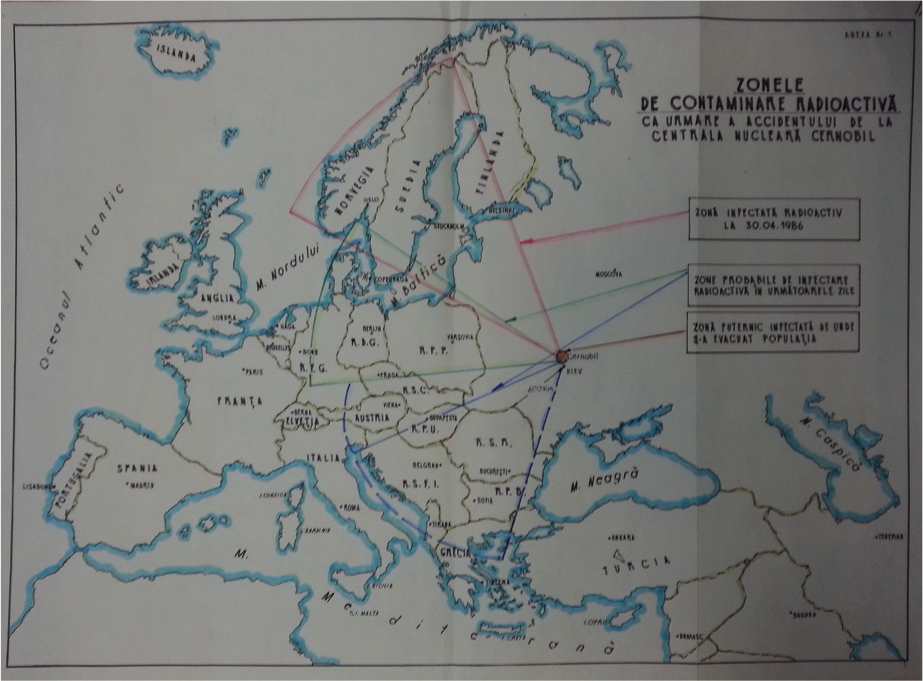
Figure 1: The Zones of Radioactive Contamination[3]

Consequently, Bucharest knew that something had gone badly wrong in Chernobyl within hours of the accident on April 26, 1986. During the first 48 hours Bucharest limited itself to expressing general condolences for the fact of the accident to the Soviet embassy, awaiting an official briefing on the situation that it knew would surely follow in short order. However, by the third day it began asking questions, but its repeated inquiries to Soviet authorities as to the nature of the problem were either left unanswered or met with denial.


Romanian Military Intelligence on the Disaster

            On April 30, 1986, Defense Minister General Vasile Milea reported that, as of April 26, the interception of Soviet military radio transmissions revealed that the radioactive cloud of Cesium 137 and Iodine 31 created by the Chernobyl disaster had reached the territories of Finland, Sweden, Norway and northern Poland. Soviet authorities – Milea further reported – “had taken measures for the evacuation of   approximately 30,000 inhabitants for a distance of 30 kilometers around the nuclear facility and the decontamination of the population from the area.” Meanwhile, the general noted, the United States “had ordered the constitution of an interministerial group to inform the public and proposed that an International Commission be constituted to study the effects of the nuclear accident.”[4]
An annex subsequently added to the report noted that “an analysis of the current and probable meteorological situation at the ground and at altitude indicates that the circulation of air will become favorable for the transport and dispersal of radioactive contaminants towards the territory of our country” over the next few days, although not in life-endangering quantities.[5]


The Winds Change: May 1, 1986
 
Figure 2: The Direction and Speed of the Wind – 1 May 1986, 0003 hours

The very next morning Ceausescu reported in the meeting of the Political Executive Committee that the feared and predicted wind change had indeed occurred, and that airborne radiation levels had abruptly increased beyond the alarm threshold in Suceava, Iasi, Tulcea, Targu Mures and Galati.[6]
The military alone had 127 permanent monitoring stations measuring possible radioactive contamination at ground level throughout the country. To this was added the resources of the Institute for Nuclear Research at Pitesti and those of the Atomic Physics Institute at Magurele – some 40 mobile stations – also being deployed to the threatened areas.[7]


Figure 3: Military Network for Monitoring Radioactive Contamination

Monitoring Station at Toaca Summit, Piatra Neamt

Comrades, regarding the necessary measures, in the areas in which the levels of radioactivity have surpassed acceptable values, do we dispose of all that is required to deal with the problem? Or is this a case in which we should request some help from the Soviets, since they are better acquainted with it as they have had other accidents – not only now, with the same sort of damage?
Nicolae Ceausescu


Non-Existent Soviet Assistance

Faced with this lack of any Soviet response, Ceausescu asked the committee whether there was sufficient equipment and expertise in country to assess and deal with the crisis by themselves, or whether this was a “case in which we should request some help from the Soviets because they are better acquainted with the problem since they had other accidents” resulting in “the same sort of damage.”[8]
Ion Ursu
The Romanians were clearly at a loss as to how to handle dangerous levels of contamination, especially given their lack of certainty as to whether more was still being produced by the burning nuclear facility at Chernobyl (or even whether it was still burning at all).[9] But their repeated attempts to extract information and elicit expertise from Moscow were left unanswered. 
After reporting that his requests to the Soviet ambassador had gone unanswered, Ion Ursu, the de facto head of Romania’s nuclear program, stated the belief that “for the moment, we have everything necessary.”[10] In a last effort to compel a response and obtain necessary expertise from Moscow, Ceausescu ordered a direct approach from the Romanian Party leadership to the leadership of the Soviet Communist Party.[11]

We should immediately call in the Soviet Ambassador and draw his attention to the situation that has been created as a result of their accident, underscoring that we must take measures as well. In light of this, we request that the Soviet specialists should make immediate contact with us so that we might receive some details regarding what must be done.
Communicate to the Soviet Ambassador that this request comes from the party leadership and should be communicated directly to his party’s leadership, and not sent along specialist lines.
Nicolae Ceausescu


Calling in the US “Cavalry”

            By this point, five days from the accident and after the contamination had already reached Romania, Ceausescu and the rest of the leadership held out scant hope that Moscow would be forthcoming either with information about the accident or expert assistance to assess and deal with its impact on territory of their country.       

Shortly after the meeting, the Romanian leadership appealed directly to the United States, requesting that Washington send one of the U.S. Department of Energy’s Nuclear Emergency Support Teams (NEST), made up of scientists, technicians and engineers, to evaluate the immediate impact of the Chernobyl incident on Romanian territory. In order to accomplish that mission the US team was granted uninhibited access to all facilities and locations throughout the country.
A word of explanation is necessary here because most Romanians and Americans are unaware that despite the very different perspectives on domestic policy, and especially on human and civil rights, that increasingly separated Bucharest and Washington until the final breaking point – following Ceausescu’s unilateral renunciation of its “Most Favored Nation” status in 1988 – the leaderships of both countries often saw eye-to-eye on broader issues of international security and the American-Romanian relationship was much closer than U.S. relations with any other bloc member.
General Vessey
Thus, for example, General John W. Vessey Jr. had been the first Chairman of the U.S. Armed Forces Joint Chiefs of Staff ever to visit a Soviet bloc state one year earlier, in March 1985. General Vessey met with Ceausescu as well as with Milea's predecessor, General Constantin Olteanu. Mircea Raceanu, the head of the North American department in the Romanian foreign ministry at the time, recalls that Vessey's visit was given "great importance" by the Romanian side as representing "the support given by the U.S. to Romanian foreign policy" as well as the "good relations between U.S. and Romanian military leadership." 
Generals Vessey and Olteanu, 3/1985

That appreciation was shared by the Americans. As one U.S. authority reported, “The visit was so successful that General Vessey and Romanian military leaders even discussed hypothetical war scenarios, an unprecedented occurrence between members of the two confronting military alliances.”[12] In December 1985, when Washington re-imposed travel restrictions on Soviet bloc diplomatic and commercial representatives, Romanians were not placed in the same category.
General Milea
Although Romanian Chief of Staff Ion Coman had been hosted at the White House back in mid-1975 (and his American counterpart, U.S. Army Chief of Staff General Frederick Weygand, had visited Romania in September 1975), General Milea was the first Warsaw Pact defense minister to visit Washington as an official guest of the Joint Chiefs in October 1986, meeting with them in their “Tank” inside the Pentagon.[13] Admiral William Crowe, Vessey’s successor, with whom Milea had “extensive talks” at the Pentagon, planned to be the second Chairman of the Joint Chiefs to visit Romania in 1987 but was prevented by his overcrowded schedule.                                                                                                                     


Immediate U.S. Response

Therefore, at this point, the Romanian dictator believed that the Americans were no military or security threat to his country, and very much interested in its long-term survival. No mention of the request to the United States was recorded in the transcript of the May 1, 19986 Political Executive Committee meeting. Nor was the U.S. NEST team mission ever mentioned publicly by the Romanians. However, it is quite apparent that Bucharest shared with Washington its frustrations regarding Moscow’s failure to provide even minimal information to assist the Romanians in dealing with a nuclear disaster now threatening their country for which the Soviets bore sole and complete liability.
Amb. Roger Kirk
As Roger Kirk, the American ambassador at the time, recalls, “five days after the Chernobyl nuclear disaster,” in a move that was “highly unusual for a Warsaw Pact member in 1986” and “intriguing” to the United States:           

Ceausescu instructed his ministers to request that a U.S. team come to Romania to monitor the amount of radiation Romania had received, as the Soviets had given the Romanians very little useful information about the nature of the radiation leaks or their effect. The U.S. team arrived within five days of the request and received full access to Romanian monitoring installations. Its conclusion, based on on-site observations, was that the radiation levels were not medically significant.[14]

As with many of the other countries affected by the Chernobyl disaster, Romania subsequently devoted a great deal of its nuclear research attention to the issues related to nuclear safety. Scores, if not hundreds, of these studies and reports, many on Chernobyl itself, can now be found on the website of the International Atomic Energy Agency. However, unlike most of Europe, the Romanians did not veer even briefly from their plans to address current and future energy needs by developing nuclear power capabilities, even if other economic and political constraints - largely of the regime's own making - delayed their projects until after the collapse of communism.


[1] Paper of General Ion Gheorghe, chief of the general staff during 1965-1974, presented to symposium  “The Romanian Army within the Context of the Events of August 1968,” organized by the Alexander Ion Cuza National Union of the Military Staff in Reserve and Retirement” as cited in Mihai Retegan, In the Shadow of the Prague Spring: Romanian Foreign Policy and the Crisis in Czechoslovakia, 1968, Iaşi, Center for Romanian Studies, 2000, p. 191.
[2] Larry L. Watts, A Romanian INTERKIT? Soviet Active Measures and the Warsaw Pact “Maverick” 1965-1989, Cold War International History Project (CWIHP) Working Paper #65, December 2012, Woodrow Wilson International Center for Scholars, Washington D.C., https://www.wilsoncenter.org/publication/romanian-interkit-soviet-active-measures-and-the-warsaw-pact-maverick-1965-1989.  See also Larry Watts, The Soviet-Romanian Clash Over History, Identity and Dominion, Cold War International History Project e-Dossier No. 29, March 2012, https://www.wilsoncenter.org/publication/the-soviet-romanian-clash-over-history-identity-and-dominion.
[3] Annex No. 1 entitled: “The Zones of Radioactive Contamination As A Result of The Accident At The Chernobyl Nuclear Plant” identified (1) “Zone Radioactively Infected as of 04.30,1986”; (2) “Zones of Probable Radioactive Infection in the Following Days”; and (3) “Zone Most Powerfully Infected from Where The Population Has Been Evacuated.” It was annexed to the defense minister’s Report No. M.1922, ANR, Fond C.C. al P.C.R. Sectia Politico-Administrativ, dosar 42/1986, f. 11-13.
[4] Report No. M.1922 from Colonel General Vasile Milea, Ministry of National Defense, to Comrade Nicolae Ceausescu, General Secretary of the Romanian Communist Party and President of the Socialist Republic of Romania, Bucharest, April 30, 1986, Ibid.
[5] The annex entitled “The Direction and Speed of the Wind Based on Observation Data from May 1, 1986, 0300 hours,” illustrated the probable path of air currents at altitudes of 1500, 3000 and 5500 meters. ANR, Fond C.C. al P.C.R. Sectia Politico-Administrativ, dosar 42/1986, f. 13.
[6] Transcript of Meeting of the Political Executive Committee of the C.C. of the R.C.P., Bucharest, May 1, 1986, ANR, Fond C.C. al P.C.R., Secţia Cancelarie, dosar 40/1986, f. 1-7.
[7] A map of the military’s radioactive contamination monitoring system was included as Annex No. 2: “System of Radioactive Contamination Observation and Warning of the Army of the S. R. of Romania (127 Observation Stations)” which notes that “The System Measures Levels of Radiation from 0.05 Milliroentgens per Hour (mR/hr) to 3000 Milliroentgens/Hour” in ANR, Fond C.C. al P.C.R. Sectia Politico-Administrativ, dosar 42/1986.
[8] Transcript of Meeting of the Political Executive Committee, May 1, 1986, ANR, Fond C.C. al P.C.R., Secţia Cancelarie, dosar 40/1986, f. 6.
[9] Ibid, f. 6-9.
[10] Ibid, f. 6.
[11] Ibid. f. 9.
[12] Raymond L. Garthoff, The Great Transition: American-Soviet Relations and the End of the Cold War, Washington, D.C., Brookings Institute, 1994, p. 582.
[13] Roger Kirk and Mircea Raceanu, Romania Versus The United States: Diplomacy of the Absurd, 1985-1989, New York, St. Martin’s Press, 1994, p. 94. The U.S. press noted that “Milea was welcomed to the Pentagon with military honors in a highly unusual visit,” held “extensive talks with U.S. Joint Chiefs of Staff Chairman Adm. William Crowe” and “met with Defense Secretary Caspar W. Weinberger and other leaders.” Los Angeles Times and Detroit Free Press, October 31, 1986.
[14] Kirk and Raceanu (1994), p. 81.

Sunday, February 7, 2016

On The Eve Of The Romanian Revolution (VI) The July 1989 Warsaw Pact Summit


Warsaw Pact Leaders, June 1989
(MTI photo: Lajos Soos)

The extent to which Gorbachev and the “closely cooperating” partners borrowed from Romanian foreign and security policy initiatives, poorly understood in the West prior to the mid-1980s and increasingly negated thereafter, had been set into stark relief at the July 1989 Political Consultative Committee meeting in Bucharest.[i] The communiqué of that meeting reflected Romania’s success in all the major domains of its independent security policy advocacy within the Warsaw Pact over the previous three decades. For example, all of the Pact members now denounced continuing instances “of interference in the internal affairs of other states, and attempts to destabilize them,” and supported the strengthening of European security through disarmament and through “substantial reduction in armed forces, armaments, and military expenditure.”[ii] All formally acknowledged that “no universal socialist models exist” and that socialism was to be “implemented in each country in accordance with its conditions, traditions, and requirements.”[iii] And Romania’s previously singular insistence on sovereignty and non-interference was now reiterated in the call for respecting “the territorial and political realities which have taken shape, the inviolable nature of existing borders, the sovereignty, and the right of every people to freely determine their own destiny.”[iv]
            Instead of pressing for greater confrontation with NATO as had all Soviet leaders (including Gorbachev) prior to 1987, the 1989 communiqué called for the same sort of direct discussions between NATO and the Warsaw Pact with which Romania had threatened to block any renewal of the alliance during 1980-1985. At Bucharest all the Pact members expressed their unanimous support for “transferring relations between the Warsaw Pact and the North Atlantic alliance to an avenue of non-confrontation, setting up a constructive dialogue between them through political and military channels, and turning it into a factor of security and cooperation on the continent.”[v]
Although nearer the end of the communiqué, and despite the fact that Moscow and the other “closely cooperating” partners avoided mention of Romanian reform proposals for real power-sharing within the alliance (consistently pursued since the beginning of the 1960s), Bucharest was able to insert the admonition to “strengthen the Warsaw Pact's political – rather than military – nature and to further improve the cooperation mechanism within it on a democratic basis.”[vi] And, while Moscow sought to prevent any discussion of the Romanian proposal, the leadership in Bucharest managed to express the need for fundamental Pact reform and the desirability of establishing full equality through the rotation of all command posts.
A similar sea change was evident regarding the adoption of Romanian policy approaches to international relations more generally, with the other Pact members now echoing Bucharest’s April 1964 “declaration of independence” and expressing unanimous support for “settling, by peaceful means, regional conflicts in the Middle East, Africa, Asia, and Central America,” while setting negotiation and mediation as the standard of inter-state conflict resolution:

Life has confirmed that the path of negotiations is fruitful and that there is no sensible alternative to it. They will continue to actively promote the political resolution of crisis situations in the world and to further enhance the UN's role in this.[vii]

The Romanian imprint was particularly clear regarding policy in the Middle East, where the communiqué expressed the Warsaw Pact’s support for holding:

… an international conference as soon as possible on the Middle East under the UN aegis, with the participation of all the interested parties, including the PLO, [and] an all-embracing Middle East settlement on the basis of the recognition of the right of the Palestinian people to self determination, to the existence of an independent Palestinian state, just the same as the right to independence, sovereignty, and integrity of all the states of the region, including Israel.[viii]

The Pact members likewise rallied around a “just settlement of the situation” in Afghanistan that would leave it independent and free to determine its “fate without any sort of interference from outside” – again echoing Romanian calls.[ix]
One of the leitmotivs of the communiqué was the greatest possible use of the UN for making and maintaining peace, long-championed by Romania and in line with its calls for an increased independent role of small and medium sized states in international affairs by involving “all countries, irrespective of their size or social structure, in solving world problems.”[x]  Likewise, the Romanian call for a united effort with the “active participation of the United Nations” in addressing the “deepening rift between the developed and developing countries” and “establishing a new international economic order,” also appeared in the communiqué.[xi]
Romanian influence was especially profound in the sphere of defense policy where its long-held positions were now reflected in Moscow’s support for unilateral reductions, withdrawals, and confidence-building measures, and its recognition of a general parity of NATO and the Warsaw Pact strengths. Even more significantly, Soviet and Pact leaders now echoed Romanian calls for jettisoning their offensive strategic posture in favor of defensive structures and strategies as a means of avoiding international tensions, a shift strikingly illustrated at the Pact’s Defense Ministers meetings since 1987.[xii] Bucharest was equally unequivocal on weapons of mass destruction:

The fundamental issue in international relations is, above all else, after the issue of repudiating the modernization of nuclear weapons, the conclusion of a treaty as soon as possible between the Soviet Union and the United States of America to cut strategic nuclear missiles by half, and then a universal treaty by the year 2000 on the complete elimination of all nuclear weapons, to which all the nuclear powers and also the other states of the world interested in disarmament, peace and life on earth should become party. …
I would like to stress once again that nuclear disarmament and disarmament in general concern not only the Soviet Union and the United States of America, and not only the states possessing nuclear weapons, but all the states of the world. For the consequences from the use of nuclear weapons would be felt by all of humanity. All states in all continents have an interest in the complete elimination of nuclear weapons and must work actively to achieve this.[xiii]

Ceausescu likewise exhorted the participants to “work toward the signing of a treaty on the elimination of chemical weapons in close conjunction with the elimination of all nuclear weapons,” and to use “the Geneva disarmament conference as well as other meetings to eliminate chemical weapons and reduce conventional weapons to the minimal levels necessary for defense.”[xiv] Reiterating the policy his country had pursed for twenty-five years, he underscored that: “Romania resolutely insists that conflicts in the various parts of the world should be settled and problems resolved solely through negotiation, without exception.”[xv]
The unequivocal support for disengagement and disarmament, particularly for more radical reduction and destruction of all nuclear and chemical weapons, and for negotiation as the only legitimate form of conflict resolution, which authorities in Bucharest expressed during the July 7-8 Warsaw Pact summit was most problematic and potentially devastating for the “aggressive encampment” characterizations of Romania now disseminated through Pact-wide active measures. Measures had to be taken.

Welcoming Gyula Horn, Rezső Nyers and Miklós Németh, July 7, 1989
(MTI photo: Attila Kovacs)

On July 9, immediately after the concluding ceremonies of the summit and before leaving the Romanian capital, Hungarian officials described the event to reporters as something very different. According to them, the meeting was dominated by Budapest’s clash with Romania over the latter’s alleged abuse of minorities and by Bucharest’s demands for a Warsaw Pact invasion against Hungary, thus marking “the lowest point for relations between the two Warsaw Pact allies and neighbors since both fell under Soviet domination at the end of World War II.”[xvi] However, while Hungarian authorities publicly denounced Romania’s minority policies, they provided information as to Bucharest’s military aggressiveness only as background.
Gyula Horn underscored this “crisis” as the breaking news of the conference to Hungarian journalists before he left Bucharest. “In the political sphere,” he insisted, “we have reached a bottom point,” terminology that analysts described as the “most negative official assessment of relations between Warsaw Pact allies” ever employed.[xvii] Ironically, as Hungarian authorities had anticipated several months before, all of the other Pact members had also rejected Budapest’s extreme demands regarding minority policy.[xviii] The Bulgarian über-ally was particularly sensitive on this point given that it actually was carrying out the sort of forced assimilation policy for which Budapest blamed Bucharest. In 1989 alone, that policy was responsible for the dislocation of over 330,000 ethnic Turks from Bulgaria in what was then the largest dislocation of population since World War II.

Todor Zhivkov and Gorbachev
As Bulgarian leader Todor Zhivkov confirmed to Gorbachev only two weeks before the July 1989 Bucharest summit, his “country was interested in the expatriation of 200, 300 and even 500 thousand Moslems,” and would in no case “admit that the Moslems are of Turkish nationality.”[xix] Gorbachev did not take issue with Zhivkov’s policy in June nor could he back Budapest in July because he was already on record backing Zhivkov’s claim that criticism of Bulgarian treatment of ethnic Turks was an "imperialistic attack against Socialism.”[xx] Thus, the clash over this issue at the July 1989 PCC meeting, while noisy, was brief.
At his first news conference in Budapest following the Warsaw Pact summit, on July 10, Foreign Minister Gyula Horn also misrepresented Bucharest as fostering nuclear proliferation and confrontation – one hundred and eighty degrees opposite the positions that the Romanian regime had just advocated in Bucharest. The Hungarian Foreign Minister’s timing was propitious for successful propagation of that disinformation line since President George Bush, Sr. was scheduled to visit Budapest shortly thereafter. According to Horn, during the summit unidentified “high-level” Romanian officials “announced that their country was now capable of producing nuclear weapons and would soon make medium-range missiles.”[xxi]
Horn pressed this point in a series of interviews with the international media, in which he described the “aggressive military threats” allegedly emanating from Romania. In the version he related to an Italian journalist several days later, he claimed that the Hungarian delegation had “warned Ceauşescu at the recent Warsaw Pact summit in Bucharest that the threat of such missiles to European security ‘must not be underestimated,’ but that the Romanian leader gave them no reply.”[xxii] 
Prime Minister Miklos Németh told an American journalist that the Romanian leader demanded that the Warsaw Pact militarily intervene in his country:

Miklos Németh

As Ceausescu ranted on, calling for armed intervention in Hungary, Németh glanced across at the Soviet leader. Their eyes met, and Gorbachev winked. … It was as if Gorbachev were saying, “Don’t worry. These people are idiots. Pay no attention,” as Nemeth put it to me.[xxiii]
                                                                                                               
         Németh later stated to a Canadian journalist “that he had sent in dozens of agents to Romania” because of “Ceaușescu’s aggressive attitude to Hungary.”[xxiv] According to Németh, “Ceaușescu had asked Soviet leader Mikhail Gorbachev several times to invade Hungary and Poland because they were not properly following the Communist line.”[xxv]
At the time, this campaign, whose proponents included Foreign Minister (and future Prime Minister) Horn, Parliamentary speaker (and future President) Szűrös, Prime Minister Németh, International Department deputy Tabajdi (soon to be made responsible for minorities abroad), only partly achieved the goal of projecting Romania as an aggressive threat because its main elements were very quickly debunked after Western verification.[xxvi] Since then, East German, Czech, Bulgarian and Romanian documents on the July 1989 Pact meeting have become publicly available that also disprove those allegations.[xxvii] Ironically, within a decade of the December 1989 Revolution the same theme of Romanian military aggressiveness and nuclear irresponsibility was not only resuscitated, it even achieved the status of mainstream interpretation.[xxviii]


[i] There were solid policy reasons for the United States not to emphasize this in 1989; the primary one being that irritating Moscow (which support for Romanian invariably managed to do) would have been counterproductive to the overriding goal of ending the Cold War. Unfortunately, policy considerations rational at the time distorted political and historical analyses long afterwards. For example, at the start of the new millennium one analyst overlooked Gorbachev’s adoption of Romania’s long-held positions on arms and spending reductions, troop withdrawals, Middle East policy, and the approach to international relations more generally to claim that the disappearance of the Warsaw Pact was the “only Romanian postulate to be partly realized,” that “Romania always fell short of defying the most important Soviet policies,” admitting only that its positions “sometimes foreshadowed” – rather than inspired – “that of the other Warsaw Pact members.” Anna Locher, “Shaping the Policies of the Alliance: The Committee of Ministers of Foreign Affairs of the Warsaw Pact, 1976-1990” May 2002, p. 18, in “Records of the Committee of the Ministers of Foreign Affairs,” pp. 14-15, in Parallel History Project on Cooperative Security (PHP), www.php.isn.ethz.ch, by permission of the
Center for Security Studies at ETH Zurich on behalf of the PHP network (hereafter: PHP). In contrast, the Israeli Ambassador to Romania in 1985-1989 noted that Gorbachev adopted “the political principles of Romania’s foreign policy, some of which were not acceptable to his predecessors.” See e.g. Yosef Govrin, Israeli-Romanian Relations at the End of the Ceausescu Era, New York, Routledge, 2002, p. 133, footnote 3.
[ii] Communique of the Warsaw Pact Political Consultative Committee Conference, 9 July 1989, pp. 2-3, PHP; Foreign Broadcast Information Service (FBIS), Daily Report, Soviet Union, 10 July 1989, “Communist Relations,” pp. 12-15; Pravda, 9 July 1989.
[iii] Communique (1989), pp. 4-5. PHP.
[iv] Ibid, p. 3.
[v] Ibid.
[vi] Ibid, p. 5.
[vii] Ibid, p. 3.
[viii] Ibid.
[ix] Ibid, pp. 3-4.
[x] Ibid.
[xi] Ibid, p. 4. As per established practice, very little of the positive elements that could be directly attributed Romania were reflected in “closely cooperating” reporting. See, e.g., the excerpted Information from the Bulgarian Foreign Minister (Mladenov) to the Politburo of the CC of the BCP regarding the Political Consultative Committee Meeting in Bucharest, 12 July 1989, pp. 1-5 in Jordan Baev and Anna Locher, “Belated Attempts at a Warsaw Pact Perestroika, 1987-1989,” 2000, PHP.
[xii] See, e.g., Possible Structural Reorientation of WP National Armed Forces Towards More Defensive Stance in the next Two to Three Years (Presentation), 17 December 1988, and Principles for Improving the UAF by the Year 2000 while Maintaining Basic Defense Capabilities (Summary), 27 November 1989 in Christian Nuenlist, “The End of the Cold War, 1985-1990,” 2001, PHP.
[xiii] Records of the PCC Meeting in Bucharest: Speech by the General Secretary of the PCR (Nicolae Ceauşescu), July 7, 1989, PHP, pp. 2-5
[xiv] Ibid, pp. 3-4, 8.
[xv] Ibid, p. 9.
[xvi] Interview of Hungarian Foreign Minister and forrner senior HWSP CC International Department official, Gyula Horn, by Henry Kamm, “Hungarian Accuses Rumania of Military Threats,” New York Times, 11 July 1989; Magyar Hirlap, 10 July 1989; MTI (Hungarian Telegraph Agency) in English, 10 July 1989.
[xvii] Ibid. The fact that so many observers were persuaded as to the unprecedented nature of “such a negative assessment of relations between Warsaw Pact allies” indicated the degree to which Soviet active measures managed to obscure the bitter clash between Romania and both the USSR and Hungary up to that point.
[xviii] Joint Memorandum of the Foreign Ministry and the Ministry of National Defense on the Future of the Warsaw Treaty, 6 March 1989, p. 10; Minutes of Meeting of the HSWP Political Committee on 16 May 1989-Excerpt on WP issues, 16 May 1989, in Csaba Békés and Anna Locher, “Hungary and the Warsaw Pact, 1954-1989: Documents on the Impact of a Small State within the Eastern Block,” October 2003, pp. 1-2, 4, 10, PHP.
[xix] Memorandum of Meeting between the General Secretary of the BCP (Todor Zhivkov) and the General Secretary of the CPSU (Mikhail Gorbachev), 23 June 1989, in Parallel History Project on NATO and the Warsaw Pact (PHP), www.isn.ethz.ch/php, by permission of the Center for Security Studies at ETH Zurich and the National Security Archive at the George Washington University on behalf of the PHP network. See also See also Speech by the General Secretary of the BCP (Todor Zhivkov), July 7, 1989, PHP.
[xx] Jordan Baev, “The End of the Warsaw Pact, 1985-1991: Viewed from the Bulgarian Archives” in Baev and Locher (2000), PHP.
[xxi] Kamm (1989).
[xxii] Andrea Tarquini, “Ceauşescu is Buying Missiles to Aim at Hungary,” La Repubblica, 16/17 July 1989; MTI (Rome), 17 July 1989, p. 15; Douglas Clarke, “The Romanian Military Threat to Hungary,” RAD Background Report/130, Radio Free Europe Radio (RFER), 27 July 1989, Open Society Archives (OSA), Box 143, Folder 4, Report 53, p. 8.
[xxiii] Michael Meyer, The Year That Changed The World: The Untold Story Behind The Fall Of The Berlin Wall, New York, Scribner, 2009, pp. 92-93. Meyer, Newsweeks bureau chief for Germany and Eastern Europe, also “airlifted into Bucharest with the German Luftwaffe during the fighting that deposed [Ceaușescu] and watched his execution in the company of the secret police that did him in.” Ibid, p. x.
[xxiv] Arpad Szoczi, “Former Hungarian PM Reveals Role Of Hungarian Secret Service In Toppling Ceaușescu,” January 30, 2015, https://arpadoliverszoczi.wordpress.com/2015/01/30/december-16-2014-former-hungarian-pm-reveals-role-of-hungarian-secret-service-in-toppling-ceausescu/.
[xxv] Ibid. See also Arpad Szoczi, Timisoara: The Real Story Behind The Romanian Revolution, Bloomington, iUniverse, 2013, pp. 315-316.
[xxvi] Interview of Csaba Tabajdi and Imre Poszgay by Guido Rampoldi, “Amici di Mosca, ma padroni del nostro esercito” [Friends of Moscow, but in Command of our Army], La Stampa, 14 June 1989; Interview of Hungarian Parliamentary spokesman and former HSWP CC International Department chief Szűrös by Nestor Ratesh in Michael Shafir, “Matyas Szűrös’s Interview with RFE’s Romanian Service,” RAD Background Report/127, RFER, 20 July 1989,  p. 5.
[xxvii] See “XXIII. Bucharest, 7-8 July 1989,” in “Records of the Warsaw Pact Political Consultative Committee, 1955-1990,” edited by Vojtech Mastny, Christian Nuenlist, Anna Locher, and Douglas Selvage, May 2001, PHP. The well over one thousand pages of Romanian documents regarding the 1989 Warsaw Pact Political Consultative Committee meeting in Bucharest were first made available in March 2015. See e.g. Romanian National Archives (Arhivele Naţionale ale României: ANR), Fond Tratatul de la Varsovia. Ministerul Afacerilor Externe, dosar 179/1989, 7 volumes; and dosar 185/1989, pp. 1-160.
[xxviii] See for example, Mark Kramer, Neo-Realism, Nuclear Proliferation and East-Central European Strategies, PONARS Working Paper 005, Washington, D.C., Center for Strategic and International Studies, May 15, 1998, pp. 16, 25.